iMood is a mobile-first mood monitoring application designed to help users perform simple daily emotional check-ins and understand their mental patterns over time.
The application focuses on minimal effort input, clear visualizations, and privacy-first design, enabling users to track their mood in seconds while gaining meaningful insights about their emotional wellbeing.
Mood tracking applications are widely recognized for helping users understand emotional patterns, identify triggers, and improve overall mental wellbeing .
iMood was developed to make this process simple, accessible, and engaging for everyday users.
Our Impact
Daily mood check-ins completed
User engagement retention rate
Emotional patterns tracked and visualized
Active users improving mental wellbeing daily
The Chalange
Despite the growing demand for mental wellness tools, existing mood tracking apps often present several challenges:
High friction in daily usage: many apps require too many inputs
Lack of simplicity: complex UI reduces daily engagement
Low user retention: users stop tracking due to effort
Limited actionable insights: data is collected but not meaningfully explained
Privacy concerns: users hesitate to store sensitive emotional data
Research shows that while mood tracking apps provide valuable insights, user adoption is often affected by complexity and privacy concerns .
The goal was to design a system that removes friction and encourages consistent daily use.
What did
NexusLabs do
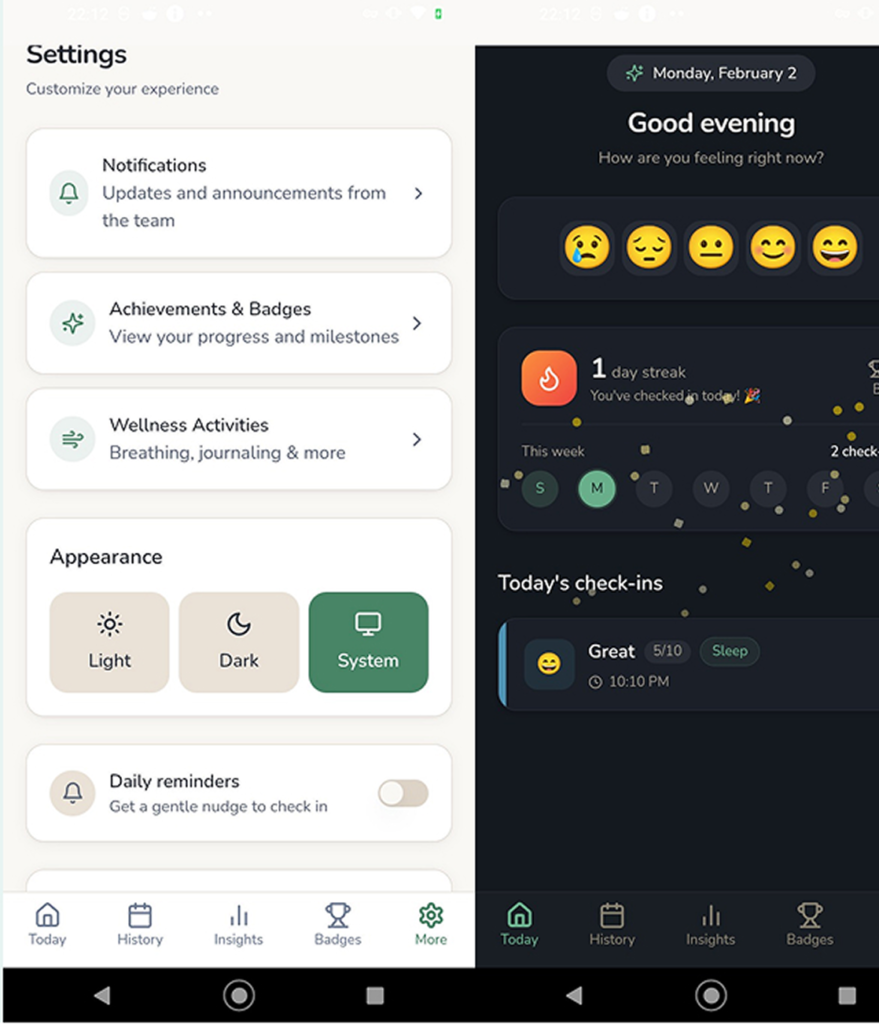
The iMood application was designed and developed as a mobile-first, user-centric system with a focus on simplicity and emotional comfort.
1. Quick Daily Mood Check-In
One-tap mood selection using emoji-based input
Optional notes and tags for context
Designed for completion in under 10 seconds
2. Calendar-Based Mood History
Monthly calendar view with color-coded mood dots
Users can visually identify emotional trends instantly
3. Insight & Pattern Analysis
Weekly and monthly summaries
Identification of recurring mood triggers
Visual charts and summaries
Mood tracking tools are known to provide insights that help users recognize patterns and improve emotional awareness

The Results
- Increased user engagement due to low-friction design
- Improved emotional awareness through visual insights
- Higher retention compared to traditional journaling methods
- Better usability with mobile-first UI approach
- Strong foundation for AI-driven future enhancements